eroded 6-inch boot
2022, group project
Client: Timberland
Year: 2022 Role: ideation, design, CMF, development
Reimagining the 6 inch boot
Result: winner of the Construct10061 contest
A project developed for the Construct10061 design challenge, a concept that reimagines the iconic Timberland 6-Inch Boot through the lens of TECTRA - a biologically focused design direction that forecasts the future of footwear and its position within the natural world, organized by Timberland and ConceptKicks.


Inspired by the erosive action water naturally does on rocks.
The scope with this concept was to reimagine the Timberland 6-Inch Boot through the lens of a biologically focused design direction, that forecasts what might be the future of footwear and our position within the natural world.
Nature is the greatest form of technical advancement and sustainability is our pursuit to replicate these natural systems. The objective of this design challenge was to theorize new ideas within the footwear process that feel like natural evolutions of Timberland’s history. The inspiration to achieve this came from the power of nature itself. The erosive action that water perpetrates on rocks overtime shape them with fascinating designs, the erosion give an illusion of lightness to something that hardly is referred to as that.
This game of contrast was translated to the concept. The 6-inch, famous for its strength and durability, was stripped of the unnecessary to create a breathable external shell structure, it features an inner sock made of recycled plastic and two adjustable leather straps that replace the iconic rear padding, becoming extremely light compared to its predecessor.
This new design allows the use of advanced manufacturing methods such as 3D printing, it’s designed for disassembly and allows recycling, leaning towards what will be the future of the footwear industry.


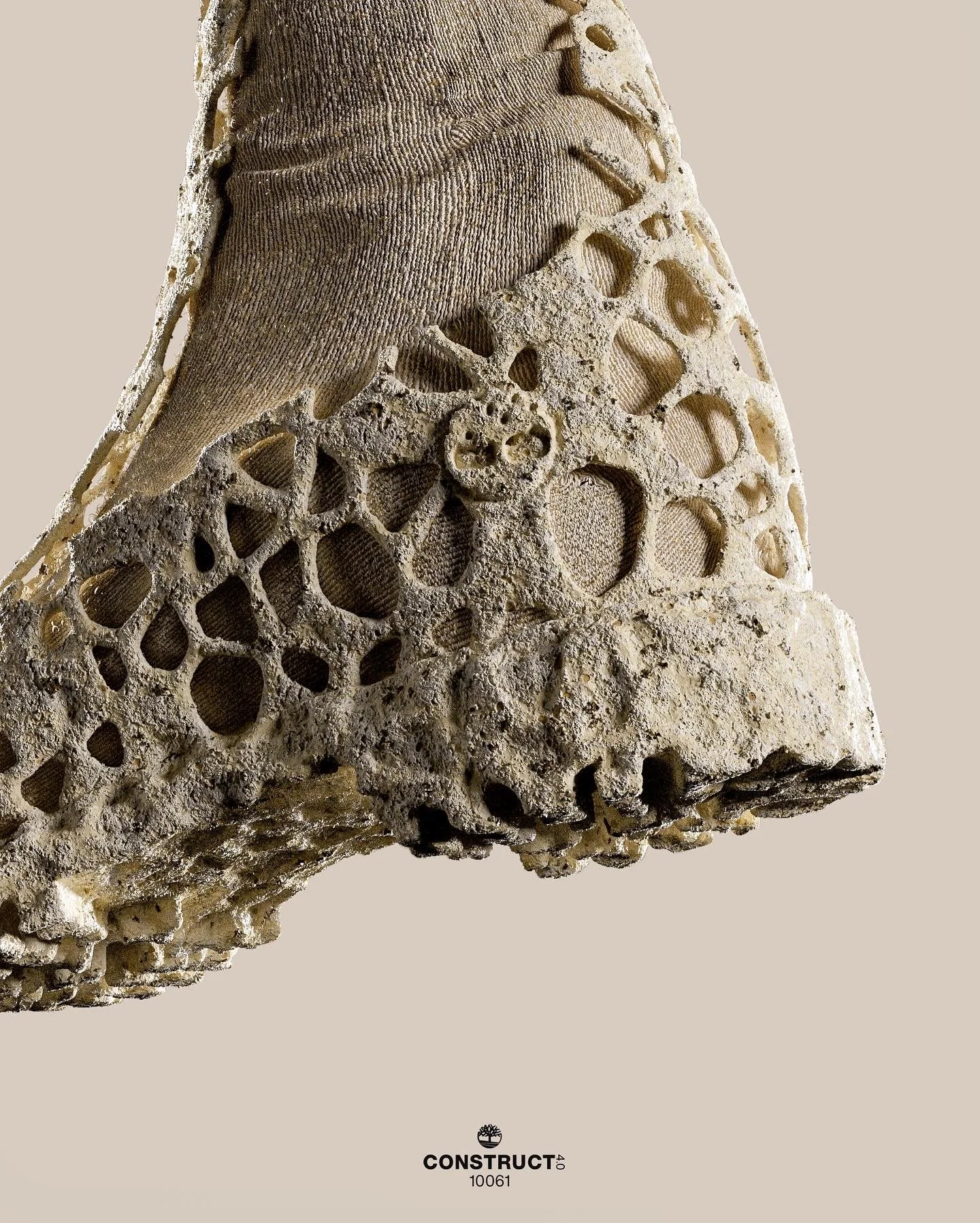
The project was reposted by both ConceptKicks and Timberland, on their Instagram pages.

eroded, industrializing the 6-inch boot concept
After developing the eroded concept together with Matteo and Stefano I wanted to turn it into reality. For this reason I made it the focus of my master degree thesis and I started working on finding the best way to make it happen.
The biggest challenge was to industrialize this boot while remaining sustainable, the footwear industry in fact is one of the most environmentally impacting: it’s responsible for 1,4% of the world’s carbon emissions, requires large quantities of water, energy, raw materials, chemicals and the majority of the shoes end up in landfills and the end of their life cycle.
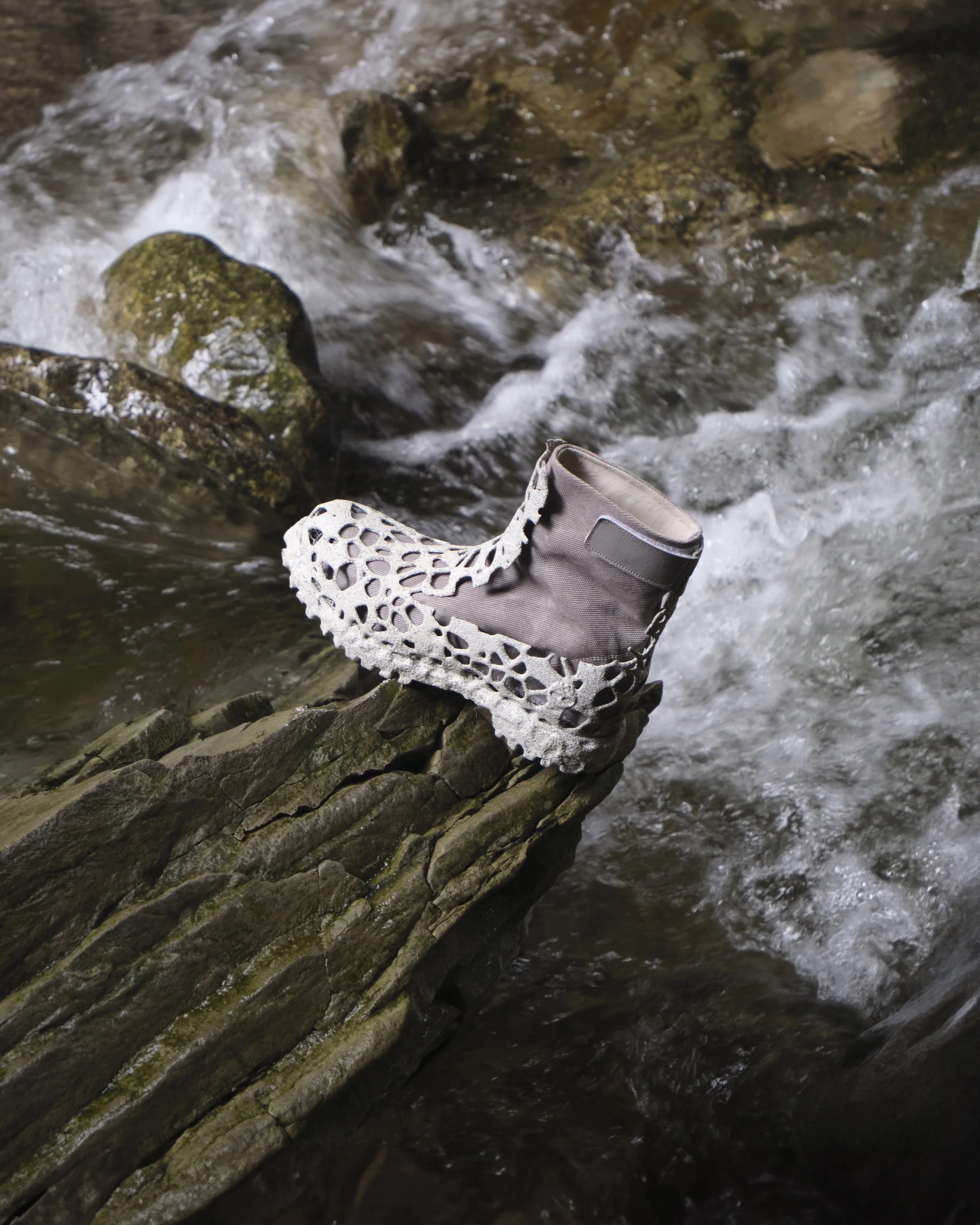
For this reason I opted to manufacture the upper shell using HP Multi Jet Fusion, a powder-bed, 3D printing resource developed by HP.
The powder is evenly distributed and fixed by a binding agent and infrared light.
Compared to traditional SLS alternatives: 10x faster, more detailed prints and more materials options.
The material I chose is TPA, an innovative Nylon based thermoplastic developed specifically for HP printers, compared to traditional TPU has better shock absorption properties and allows a substantial weight reduction.

To make the shoe actually wearable I conducted a weight distribution study that helped me decide of to frame the densities in the outsole lattices:
front features a Voronoi lattice that offers more shock absorption, ideal for springiness in jumpstarts
back uses a Tetrahedral lattice, helps evenly distribute the weight and give support on casual rides

I then worked on the internal sock construction


The goal with the sock, to keep the boot true to its origins, was to make it waterproof, breathable and comfortable.
To achieve this I went for a layered construction. On the outside an engineered knit made with recycled polyester allows it to quickly dry when it gets wet, underneath a TimberDry bootie, a proprietary material developed with more than 50% of recycled plastic, this guarantees a complete seal from external water but allows breathability. A padded insole is found inside to provide more comfort to the foot.

The results with the first proto were incredible, compared to a traditional 6-inch boot in fact, eroded weights 40% less at just 360 g per shoe.
The shoe was tested for a day and it resulted walkable and usable thanks to the cushioning and its construction.
Despite that there are still possible improvements, I would have liked to increase the thickness and close the holes on the perimeter to make the overall structure more substantial.
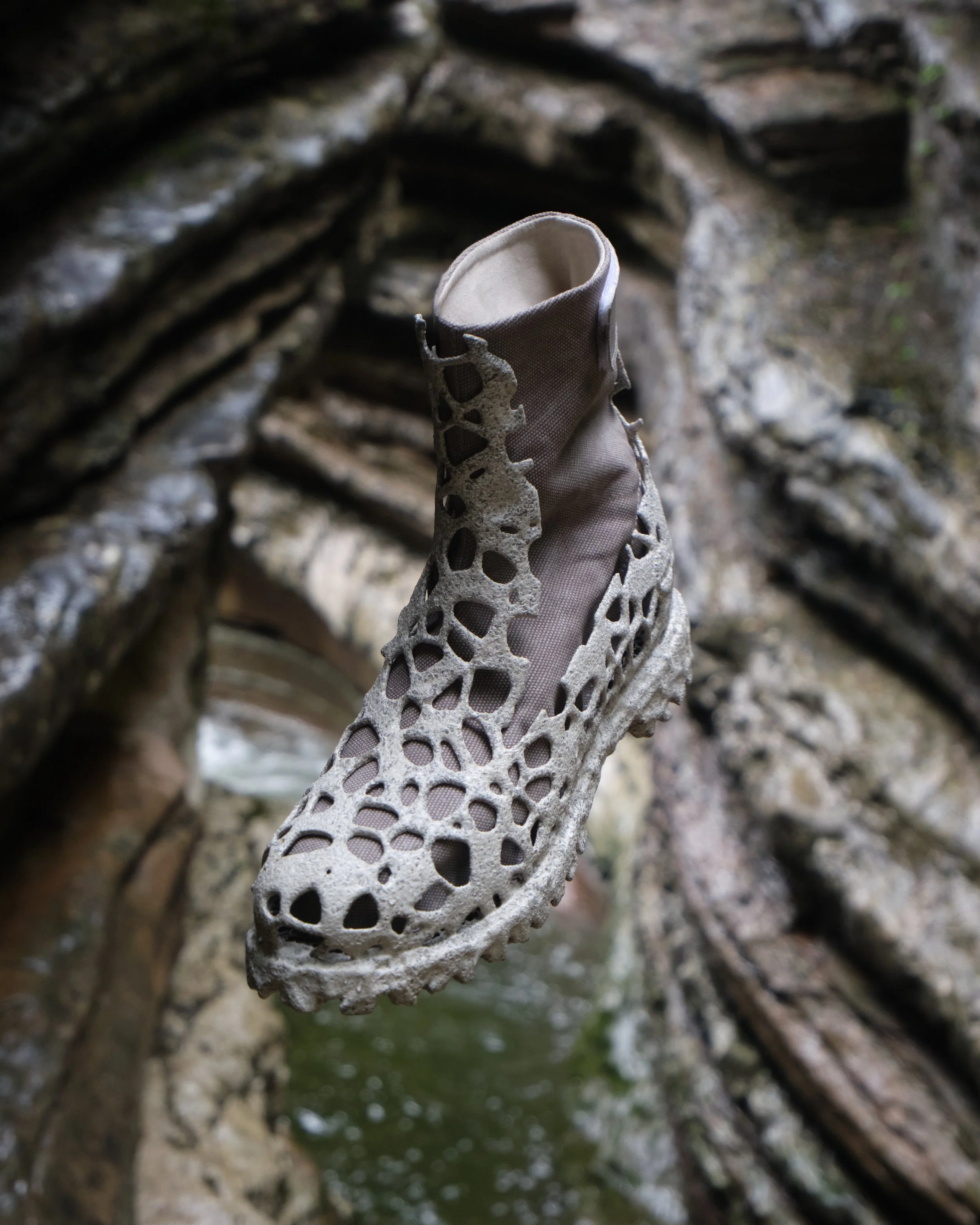
concept developed with: Matteo Romanò and Stefano Vignini
renders in the full thesis: Matteo Romanò
pics: Marcello Maranzan
manufacturing support: HP and Shoesland